History
Astaroth (Asteroth, Ashtoreth, other Heb. עשתרות - packs, crowds, gatherings). The name Astaroth actually comes from the ancient god Astara. Astar is one of the most mysterious deities of ancient Semitic mythology. In West Semitic mythology, Astar was worshipped along with Astarte (presumably as her husband). In Yemeni mythology, he was the supreme deity (revered in all the states of Ancient Yemen.
Astar, also known as Ashtar, Astur, Attar, Akhtar, Ashtarttar, is the god of the morning star in Western Semitic mythology. The name appears as Attar (Aramaic), Atar (South Arabia), Astar (Aksum), Ashtar (Moab), Agtar (Ugarit), Istar in Mesopotamia and Akhtar (Arabic). This is an ancient Semitic deity, whose role, name, and even gender varied depending on the culture. Depicted as either a man or a woman, the deity was identified with the planet Venus. Representatives of both sexes of Astar / Astarte were identified with the planet Venus, that is, the morning and evening stars, in the manifestations of Semitic mythology. Astarte was known as Attar in south Arabia, where she became a male deity. An interesting inscription demonstrates this transition in the process, as the goddess Attar was a mother and bifurcated (rather than transformed) into a male and female deity, father and mother. His father was known as Attar or by such epithets as "Ilmakkahu", "Talab Riyam", and his mother as "Shams". Therefore, the deity Astar is only so related to the Hellenistic goddess Astarte.
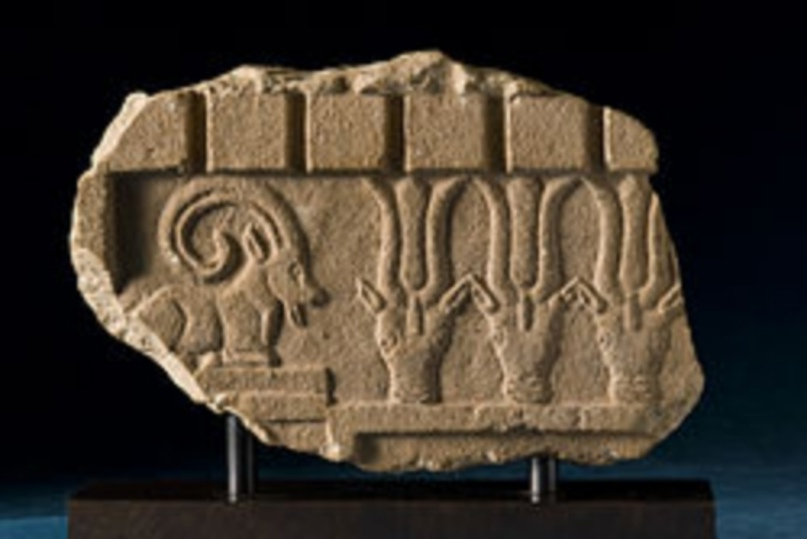
In pre-Islamic South Arabia, he was worshipped as the god of war Attar. As the god of war, he is often referred to as "The One who is Brave in Battle." One of his symbols was the tip of a spear, and the antelope was his sacred animal. He had power over Venus, i.e. the morning star, and it was believed that he provided the peoples of the desert with water. On the South Arabian fragment of the 5th century BC stele, there is an image of a reclining capricorn and three heads of the Arabian oryx. The mountain goat was one of the most sacred animals in South Arabia, and the oryx antelope was associated with Attar. This connection with mountain goats, as will be explained later, is very important for the cult of Astara / Astaroth.
As a god, Attar was the god of fertility. From south Arabia, his worship was transferred to Abyssinia, where he was also known as Astar, and where many features of his worship are still preserved in the rituals of the Abyssinian church. In the ancient Canaanite legend, Astar tries to usurp the throne of the dead god Baal, but is defeated. In the semi-arid regions of Western Asia, he was sometimes worshipped as the rain god. Its female counterpart is the Phoenician Astarte. In more southern areas, it is probably known as Dhu-Samani (Dhu-Samani).
Astar appears in the most ancient Ugaritic mythology, and this is the most interesting moment for us. All Ugaritic deities are divided into two groups, the first are the gods of cosmic order, and the second are the Chthonic gods, the gods of destruction and chaos. The first group includes, first of all, Ilu, the Creator of creation, his viceroy on earth, Balu (Baal), Shapashu, etc. Secondly, they are always trying to destroy this order, invade our world and reign in it, which is why the gods of the cosmic order, primarily the Strong Baloo, fight at certain times and drive them back to their abodes, thereby protecting our world and people. Moreover, this happens, as can be understood from the mythological context, with a certain frequency, on the basis of which the ritual component of the Ugaritic religion was built, i.e. so that this would continue to happen and the cosmic order would not be destroyed. These latter include, first of all, Mutu (Mot) - "the beginning and the end of everything"; his paredra is the goddess of the underworld Sheol (the Hebrew name for "grave" and "hell", comes from this name); Yammu is a monstrous and formidable god of the sea, who lives in the depths; among them Astar / Astur.
Astar (Ashtar, Astur) - in Ugaritic mythology, the god of the desert and the desert wind. But this is not the Ugaritic god proper, but the god of their neighbors, the ancient Arab Bedouins, the nomads of the desert. Therefore, Astar did not enjoy any popularity in Ugarit, although he belonged to the old common Semitic gods. The cult of Astara/ Astura was widespread among the Semitic peoples of the Near East. Back in the lll millennium BC, the cult of this god existed in Ebla. In Ebla, Astar was paired with the dark cave Astarte. He was greatly revered by the Arabs and Arameans. In Northern Arabia, he was even the supreme god. But it must be emphasized that the worshippers of this god lived mainly in the desert and were nomads. Therefore, in Ugarit, he was primarily the god of the desert and thus opposed civilized life, which explains the fear and rejection of Astara by Ugaritans. But it is not the antagonism of a civilized city and a wild desert with an all-consuming wind that becomes a symbol of the antagonism of cosmic order and chaos that explains this attitude towards Astara. And not even the hostility of the desert nomads who raided, and not the mystery of the cult of their sinister god, about whom very little is known. First of all, the settled agricultural peoples viewed the desert as the realm of death and the other world, and Astar was the personification of the desert and its deadly wind. That is why Astara appears as evil and violence against people and the world. Thus, the Astar of Arabia had the features of a hunter and a war, and he was called the "Astar of Destruction." Moreover, the barren desert symbolizes the emptiness and infinity of outer space, which is why the southern Arabs called it "Astar starry". Thus, Astar, associated with the desert, was considered as an evil principle, the enemy of Baloo and the entire cosmic order. At one time, Astar claimed royal power over the whole world, and he manages to achieve it. As the text of the myth says:
• "Astar - Terrible was his name. He climbed to the top of Tsapan, perched on the throne, but his heels were dangling."
Especially interesting is the fact that Astara is called "Terrible" and this is his main epithet. But this god refuses power not even as a result of a battle, but simply because the royal throne of the gods does not suit him, and as they say, "he returned to the land where he was lord" - that is, to the desert or to interstellar space and the void.
So, in the myth of Balu and Mutu, a story is also described: when the Ugaritic king of the gods Balu dies, the ancient Akkadian god Astar takes his throne (literally sits on the throne), but over time Balu resurrects, leaves the "Land of No Return" (i.e., already expels Astar (the throne was great for him) and he regains power over the world under the name "Baal-Haddad".
This mythopoeic situation can be interpreted as follows. The number of nomadic tribes of Haabiru (Jews) The "Lot" ("Moab", "Ammon", "Ashir" and "Issachar") that settled on the lands of Ugarit for a long time was such that the cult of Astar (Melk-Astar), the ancient Semitic god of fertility and irrigation, initially replaced the worship of a similar local god Balu (Baal-Zaphon); for on the In the ancient East, the mentality of believers at all times was characterized by a high susceptibility to honoring (and borrowing) the gods of conquerors or powerful neighbors. The attitude of the local population to the presence of foreigners in Ugarit is clearly expressed through the characterization of the god of the Lot tribe: "he (Astar) is subordinate only to the higher gods, and he creates violence against people." The myth expresses the hope that Astar would "return to the land where he (previously) was the lord" (so that the Haabiru would leave Ugarit and return to Mesopotamia). Probably, the decades-long situation of uncertainty and apprehension in which the Haabiru "Lot" tribe found itself in the lands of Ugarit led to the fusion of the capacious image of the ancient Akkadian god Astara (the hypostasis of Ishtar of the Lot tribe) with the image of the warlike Haddad, at least for the Issachar clan, the "wild bull of rage", the god of battle battles (his weapons were lightning spears), thereby summing up the power of Astara and Haddad, mobilizing all the divine power of the tribe for a possible confrontation. The personal deity (Ishtari) of the Lot tribe clans was the male hypostasis of the goddess Astarte, the god Astar. The image of the new deity "Haddad-Astar" in the hypostases of the god of thunder and rain (Haddad) and the god of fertility (Astar) gradually merged with the image of the local Ugaritic thunderer, the god of rain and fertility, the Strong Balu (Aliyyanu-Balu) into a single deityaquo;Baal-Haddad", which revived Baloo, raised his image to the king of the gods of Canaan (regains power over the world). In myth and other Ugaritic texts, the god Balu (Baal-Zaphon) already referred to as Haddad - "God Haddad is back in the kingdom." As it turned out (see "The Land of Canaan"), so haabiru in the Ugaritic nome developed a new image (syncretic deity) - the warlike "Haddad-Astar", who, according to Egyptian texts ("Hyksos and their descendants"), was considered at least a personal god of the "Issachar" family. As is known, in Canaan, the god Astar (Asher), who merged (the "Lot" tribe turned out to be very flexible) with the local trans-Jordan god Kemosh (Kamos, Kamosh), was also the main (personal and tribal) god of the Moabites and Ammonites (Sud.11.24), the "Moab" clans (Mesha inscription) and "Ammon or Ben-Ammi", biblical brothers, sons of "Lot" (Lot's father Harran), who left Mesopotamia with the Abraham tribe, i.e. the god Astar/Asher/Asir is the tribal god of the Harran tribal association and the Lot tribe that was part of it. The wise King Solomon, being well aware of the connection of the Haibiri clans with one or another tribal god, did not just worship Astara-Kemosh (Deuteronomy; 3 Samuel 11:7, 33; 4 Sam. 23:13), but he also built a sanctuary in Jerusalem on its Mount of Olives (Astara-Asher), which was destroyed by King Josiah.
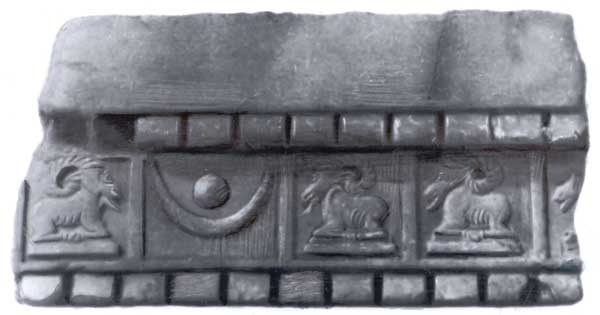
In ancient Yemeni mythology, Astar is the supreme deity. The only Ancient Semitic god who retained his name and functions in this mythology and was revered in all the states of Ancient Yemen - Saba, Main, Qataban, etc. He was a god of war, formidable and strong, and at the same time a god-protector, guardian of tombs, inscriptions, protecting them "from everything damaging and destroying." He was also the god of fertility and irrigation. Astar headed the pantheons of gods in the states of Ancient Yemen, but did not act as the ancestor of the people, the patron god and ruler of the country. Only in the state of Saba is the expression "possession of Astara and Almakaha" found, denoting this state, which could indicate the functioning of Astara as a patron god. This is probably explained by the fact that Astar was originally the patron god of the Saba tribal union, from whose merger with the Fayshan union at the end of the 2nd millennium BC the Sabean people arose. As a result of Sinoikism, the patron god of the Fayshav-Almakh union became the ruler of the country, and Astar acquired the functions of the supreme deity. Later, Astar became the patron god of the royal dynasty of the Sabean state. In Saba, Astar's wife was his hypostasis Khaebas. In the Hadhramaut, his female hypostasis is known as Astaram. In Qataban and Hadhramaut, Astar is associated with Zat Himyam. Of the various hypostases of Astar, the most significant are Astar Sharkan (Oriental), revered throughout Yemen, the Maini Zu-Kabdim, "lord of harvest", and the Sabean Zu-Ziban, "lord of streams" (also Mutibnatyan and Mutibkabat, Hawbas, Hagar-Kaham). The sacred animals of Astara were the antelope, the bull, and the goat. The symbols are a spear, a hand, and a door, and sometimes a monogram of a name. Astar, along with the moon god, was also symbolized by the widespread image of the disk of Venus above the crescent moon in Ancient Yemen. A fragment of a frieze from Marib has been preserved. 5th-4th centuries BC, where the disk of Venus (Astar) above the crescent moon and mountain sheep (symbol of the moon god) are depicted.
Astar had a highly developed cult. All the sacred actions of the rulers of Saba were directed towards him. An "alliance" was concluded with Astar, which apparently formed the basis of the power of the Sabean rulers. Sacred meals in honor of Astara are known, accompanied by a "detour" of special cult sites - kayfs, ritual hunting, sacrifice of victims, libation of incense. Probably, the same actions were performed in Main and Katabana. Many officials in the Sabean state were priests of Astara. There were numerous temples of Astara. His Rasaf temple was the main temple of the Main. From the middle of the 1st millennium BC, Astar was gradually replaced from the position of the supreme deity by local gods (with the exception of the state of Ma'in), but he continued to be revered until the 5th century AD, that is, longer than other Yemeni deities. In one of his hypostases, he perceived the Moabite Kemosh. Probably, the West Semitic Astar, as the god of war, was identified with the Greek Ares (in the Hellenistic era).
R. Graves writes that "Zagreus-Dionysus was also known in Southern Palestine" as Astar. Ras Shamra hill is located on the site of the ancient city-state of Ugarit in Syria. During his excavations, tablets were discovered, which contained stories about the fate of Astar, which are described above, how he temporarily found himself on the throne while his owner Baal was forced to stay in the underworld. The fact that Astar was still a child is indicated by the following detail: sitting on the throne, he did not reach his feet to its foot. R. Graves connects the biblical prohibition "Do not boil a kid in its mother's milk" (Exodus 23, 19; 24, 26; Deut. 14, 21), with the prohibition of initiation ceremonies in honor of Astara. And we have already mentioned the connection of Astara with ancient images of mountain goat heads. The epithet of Astara in Ugarit is "terrible", which may be related to the rituals of tearing apart a baby, or his living substitute god, a kid, that terrified people. The Canaanite-Amorite god Astar in West Semitic mythology was worshipped along with Astarte as her husband. Just as R. Graves believed, in particular, Maimonides, that boiling a kid in its mother's milk was part of the pagan cult of Astaroth.
The meaning of the covenant "do not drink a kid in its mother's milk" is very mysterious and has been interpreted by different researchers in different ways. Maimonides Arabanel argued that this forbade the imitation of the pagan rite of the Sabbai Arabs of the Astara cult, who, collecting fruits, sacrificed a kid boiled in milk to their gods. Jews also believe that boiling a kid in its mother's milk is considered cruelty by law. And Graves hints that the baby goat was a substitute for a newborn baby in a more archaic period. An anonymous medieval Karaite writer said that "the ancient pagans had a custom of boiling a kid in its mother's milk after harvesting, and then sprinkling that milk on trees, fields and orchards; according to popular belief, this rite had the magical power to increase next year's harvest." Confirmation of this report was found during the excavations of the city of Ugarita. The text of the Ugaritic (Canaanite) ritual (no later than the 13th century BC) says: "On the fire seven times, the boys boil a kid in milk, a lamb in oil and on the fire seven times, food for Astarte" - that is, part of the ritual of sacrifice to the goddess Astarte is described. The description of this particular religious ritual was found on a tablet from Ancient Ugarite. The text that described this ritual was called "The Birth of the Gods." It spoke about the sacrifice to the goddess of fertility Astarte, part of which was the cooking of a kid in his mother's milk. In the second millennium before the Birth of Christ, the ancient Jews had numerous economic and cultural ties with Ugarit. The influence of pagan beliefs and traditions on Israel was enormous. In this situation, it was easy to give up your faith. Since Jews were engaged in cattle breeding and agriculture, pagan rituals that were associated with the fertility of the earth could arouse their special sympathy. That is why the Holy Scripture warns, "You shall bring the first fruits of your land into the house of the Lord your God; you shall not boil a kid in its mother's milk" (Exodus 23:19; Deut. 26.2). In other words, by forbidding cooking a kid in its mother's milk, the Holy Scriptures forbid taking part in a pagan ritual that was associated with the cult of fertility and the worship of the goddess Astara and Astaroth. It is generally believed that the cult of Ashtoreth in Israel is due to the influence of Astarte of Sidon: "And Solomon began to serve Astarte, the deity of Sidon" (3 Kings 11:5). However, not in Sidon, but in the text of the ritual associated with the goddess Asirat of Ugarit, it says: "Seven times the boys boil a kid in milk on the fire." The same fertility ritual was performed in Ugarit in honor of Rachmayu-Anat. It was this Canaanite ritual that led to the requirement of the Old Testament: "Do not boil a kid in milk." The altars of Astarte, erected by King Solomon, were destroyed only by Josiah. There are cities named after deities, for example, Astaroth, Astaru or Ashtar-Karnaim in Transjordan (Gen. 14.5).
<p class="">Thus, we can summarize some of the features of Astar and his cult. This is the god of the desert spaces, where it is possible to move only along known caravan routes and guided by the stars, therefore, Astaroth in anti-space Satanism is called "The Master of threshold points and the intersection of worlds", because the desert is a place of intersection with the unknown and beyond; and also "The Lord of the Dark Gate", because in the desert, according to many legends, the gate opens in the abode of djinn and Ifrits; and also as a "Guide through the Abyss" - the wasteland of the desert. But all this is reflected in the earthly dimension and in the cosmic expanses, which is why Astar is called "stellar". Like the destructive wind of the desert (perhaps this is why it is said that Astaroth has the disgusting harmful breath of death), perhaps it is Astar who is called in the Kabbalistic Zohar - the "heavenly serpent" crossing the firmament, and in anti-cosmic Satanism the "Accusing Serpent" and "Father of Serpents", and as you know, snakes are inhabitants of the desert, Astaroth crosses it and holds a viper in his hand. Astara's main title is "The Terrible One," and Astaroth is said to have the appearance of the most hideous and terrible angel, but who can transform into a beautiful young angel. As the god of rain and irrigation, Astar opens the abyss of heaven and the abyss of earth, therefore, in anti-cosmic Satanism it is said that Astaroth has the keys to the Gates of the Abyss. Astar is a fierce hunter and warrior god, which is why it is said that under the command of Astaroth, there are terrifying legions of Azariel. All this corresponds to the ancient Egyptian god Astar.The cult of Astara itself was widespread among the Semitic peoples of the desert, it was structured, it had temples and priests, and the king could act as the high priest. One of the most important rituals was the ritual of circumambulation of a special cult object - kaifa, similar to the Muslim rite of circumambulation of the Kaaba. This ritual was part of the duties of the rulers of Saba and Kataban. It was probably related to astral myths, was dedicated to various gods, primarily Astara, and was often performed by order of the oracle. The ritual hunting performed by the rulers of Saba, Qataban and Hadhramaut also played an important role. It was associated with ritual hunting, as the Astar hunted antelope or gazelle (the Astara animal), although, as is known from pagan cults, a man in a horned animal mask could also act as an "animal" for the pen. The cult is also associated with the mutilation of infants, because Astar himself sat on the throne of the gods as a child, which so outraged and rejected the civilized inhabitants of Ugarit, who gave this god the epithet "terrible". Perhaps later this sacrifice was boiled in milk, as a kind of communion of Astara. A goat could act as a substitute, whose images have been preserved associated with Astara.